What Is Shockwave Therapy? A Complete Guide for Active Adults
You've tried rest. You've done the physical therapy. You've taken the anti-inflammatories. And the knee — or the shoulder, or the heel — still isn't right.
For a lot of active adults in their 40s, 50s, and 60s, this is a familiar story. Not a catastrophic injury. Not something that requires emergency surgery. Just damage that hasn't fully resolved — and a body that seems to be losing the argument with time.
Shockwave therapy is one of the most effective non-invasive tools available for exactly this kind of problem. If you haven't heard of it, or you've heard the name but aren't sure what it actually does, this guide will walk you through the science, the process, and the clinical evidence — without the hype.
This isn't a workaround. It's a targeted approach to stimulating the repair processes your body is capable of — but may have stopped prioritizing.
What Shockwave Therapy Actually Is
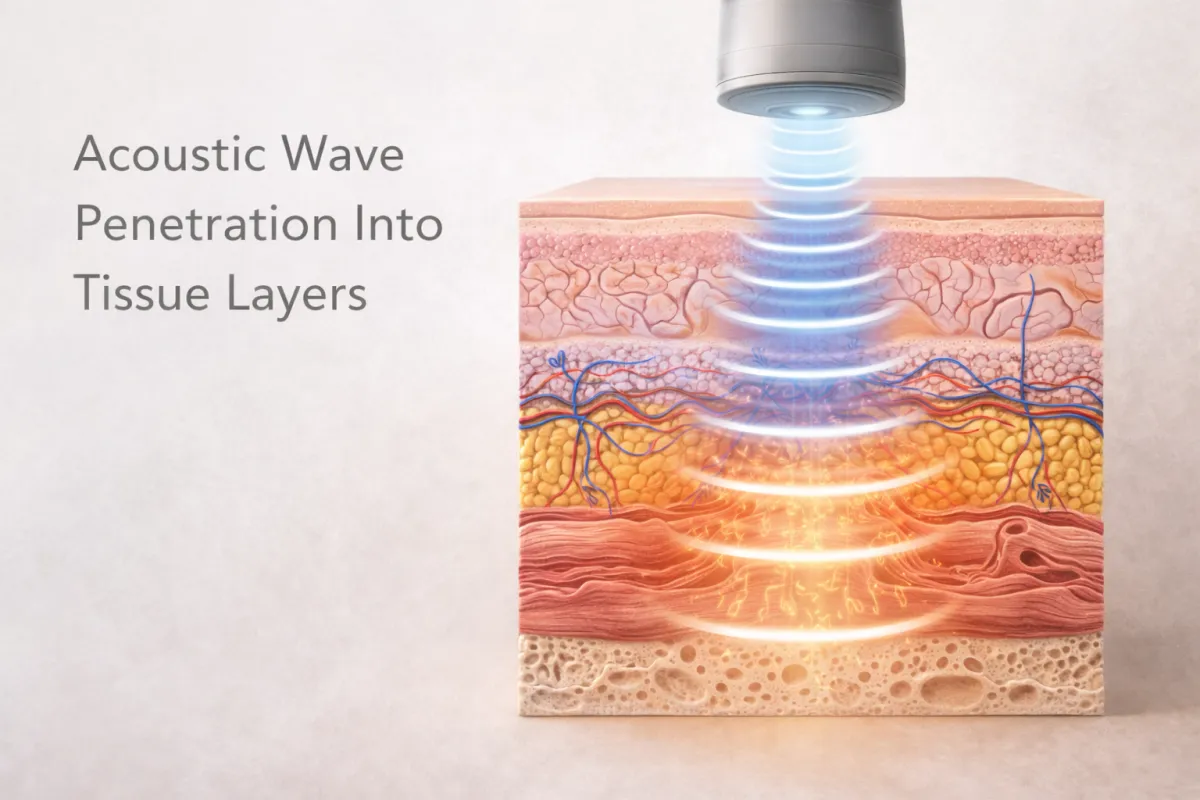
Shockwave therapy — formally called Extracorporeal Shock Wave Therapy, or ESWT — uses acoustic pressure waves to stimulate biological responses deep within soft tissue, tendons, and the tissue surrounding joints. The term 'shockwave' refers to the pressure wave itself, not electrical shock. There is no electrical current involved.
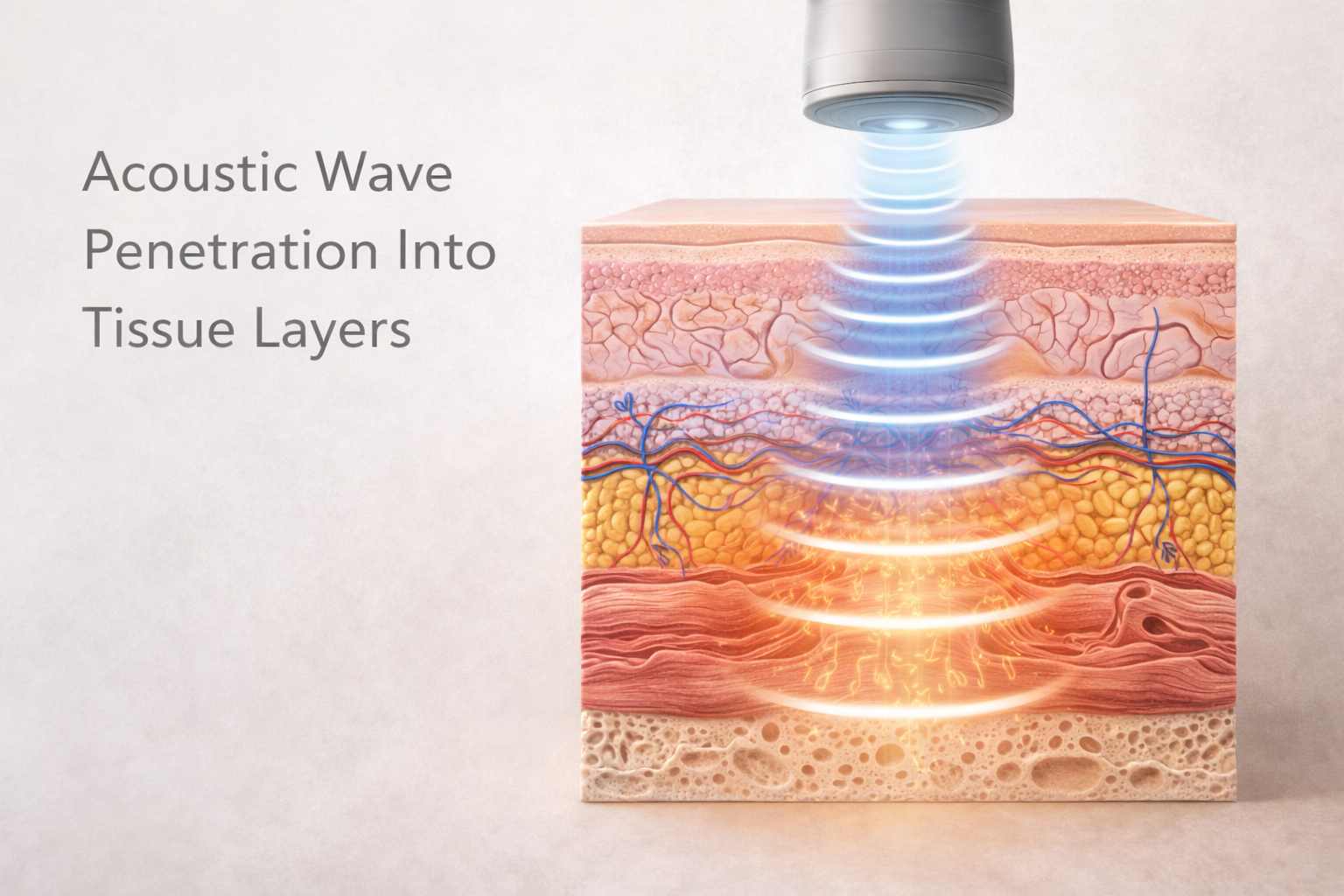
A handheld device is applied to the treatment area and delivers controlled pulses of acoustic energy into the tissue. This triggers a cascade of physiological responses at the cellular level — increasing blood flow, stimulating collagen production, breaking down calcified deposits, and prompting the body to renew its repair response in areas where healing has stalled.
There are two main forms used clinically:
•Radial shockwave therapy (RSWT) — pressure waves that spread outward from the point of contact. Most commonly used for tendon conditions and surface-level musculoskeletal issues.
•Focused shockwave therapy (FSWT) — concentrated waves directed at a precise depth and location. Used for deeper tissue targets, including joints and calcifications.
Both forms are non-invasive, performed in-office, and require no anesthesia.
How Shockwave Therapy Works — The Biology
The reason shockwave therapy is effective isn't complicated, but it is worth understanding — especially if you're someone who wants to know the rationale before committing to a treatment.
Many chronic musculoskeletal conditions — tendinopathies, calcific deposits, joint degeneration — persist not because the body can't repair them, but because the body has essentially deprioritized the area. In the early stage of an injury, the body floods the site with inflammatory cells and repair signals. Over time, if the tissue hasn't fully healed, that acute response fades. The damage remains, but the active repair effort slows.
Shockwave therapy creates a controlled mechanical stimulus that re-activates that repair response. Specifically, it:
•Increases local blood flow and vascularization — bringing fresh repair resources to the area
•Stimulates fibroblast activity — the cells responsible for producing collagen and rebuilding connective tissue
•Disrupts calcific deposits — breaking up calcium buildup that restricts movement and causes pain
•Promotes neovascularization — the formation of new blood vessels that support long-term tissue health
•Modulates pain signal transmission — providing relief through neurological pathways, not just structural repair
The result is a tissue environment that is actively rebuilding — not just managing.
Shockwave doesn't force the body to heal. It reminds it to.
Conditions Shockwave Therapy Is Used For
Shockwave therapy has a well-established clinical track record for a specific set of musculoskeletal conditions — particularly those involving tendons, fascia, and the tissue surrounding joints. It is not a general-purpose pain treatment, and Harper MD doesn't use it as one.
The conditions where clinical evidence is strongest include:
Chronic Tendinopathies
Tennis elbow (lateral epicondylitis), Achilles tendinopathy, patellar tendinopathy, and rotator cuff tendinopathy are among the most extensively studied applications. These are conditions where the tendon has been repeatedly stressed, partially damaged, and never fully repaired — and where the body's acute healing response has essentially wound down.
Plantar Fasciitis
One of the most common and most stubborn conditions treated with shockwave therapy. When the plantar fascia — the band of tissue running along the bottom of the foot — becomes chronically inflamed or damaged, it can make every morning's first steps painful. Shockwave therapy is now considered a first-line treatment option for plantar fasciitis that hasn't responded to conventional care.
Calcific Shoulder Tendinitis
Calcium deposits in the rotator cuff can restrict movement and cause significant discomfort. Shockwave therapy is particularly effective at disrupting and dispersing these deposits — often in ways that cortisone injections cannot replicate.
Knee Pain and Joint Degeneration
For active adults dealing with knee pain related to degeneration, patellar issues, or soft tissue damage around the joint, shockwave therapy can improve tissue quality and reduce the inflammatory cycle that keeps symptoms persistent.
Hip Pain and Trochanteric Bursitis
Lateral hip pain — common in runners, cyclists, and anyone who spends time on their feet — often involves the bursa and surrounding tendon attachments. Shockwave therapy targets this area effectively without the need for injections or surgery.
![Anatomical diagram showing the joints and soft tissue areas commonly treated with shockwave therapy including knee, rotator cuff, plantar fascia, and hip]](https://assets.cdn.filesafe.space/BjdJQzXsoMWLKLk4nhQL/media/69de9cfe3d44725644903a25.jpg "Anatomical diagram showing the joints and soft tissue areas commonly treated with shockwave therapy including knee, rotator cuff, plantar fascia, and hip]")
What to Expect During a Shockwave Therapy Session
Sessions typically run between 15 and 30 minutes depending on the area being treated and the protocol used. There is no preparation required and no recovery period that prevents you from driving or returning to normal activity.
Here is what a typical session looks like at Harper MD:
•A brief evaluation of the treatment area — including palpation to identify the most relevant tissue targets
•Application of a conductive gel to the skin (similar to ultrasound)
•The shockwave device is applied directly to the area and pulses are delivered in a controlled sequence
•You will feel pressure and, in some cases, temporary discomfort — particularly in areas of active tissue damage. This is normal and expected
•Following the session, mild soreness in the treated area may persist for 24–48 hours. This reflects the tissue response that has been initiated
Most clinical protocols involve a series of sessions — typically 3 to 6 — spaced one week apart. The exact number depends on the condition, its severity, and the individual's response.
There's no downtime. No needles. No recovery room. Most patients return to their normal schedule immediately after treatment.
How Shockwave Therapy Compares to Other Options
Understanding where shockwave therapy fits relative to other treatments helps clarify whether it's the right next step for you — or for someone you're discussing it with.
vs. Cortisone Injections
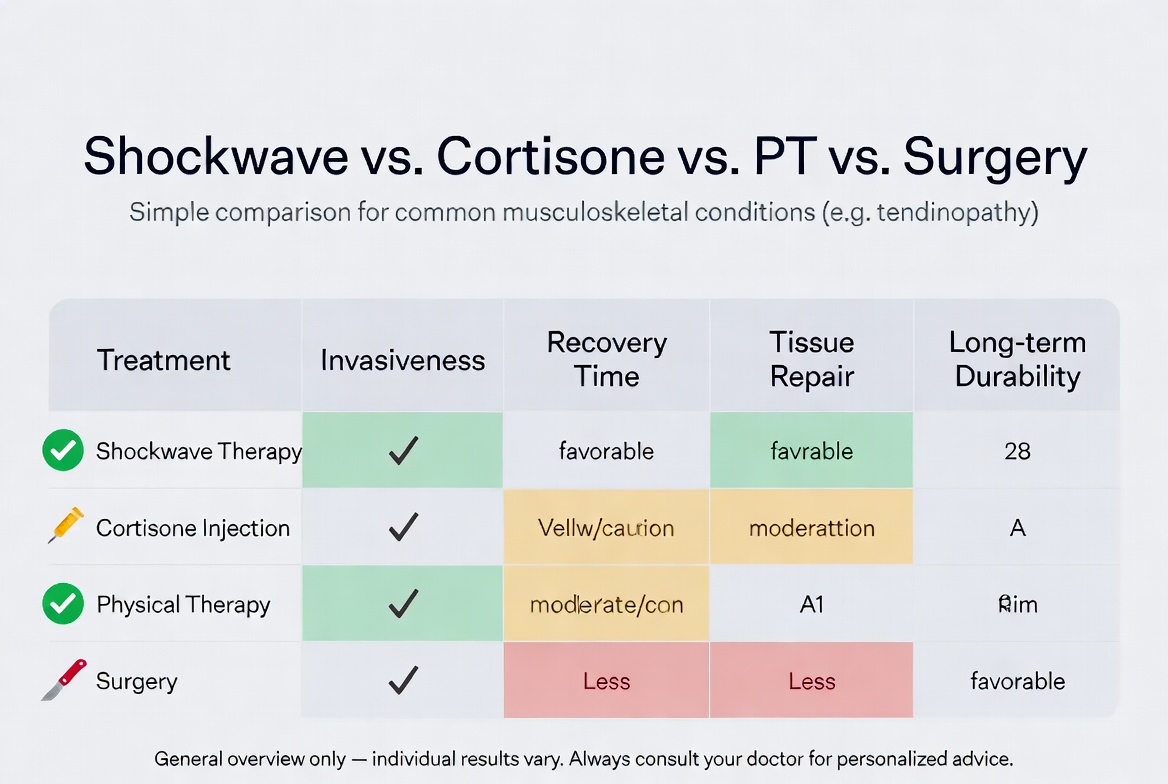
Cortisone is an anti-inflammatory agent. It can reduce pain effectively in the short term, but it doesn't rebuild tissue — and repeated injections can degrade tendon integrity over time. Shockwave therapy works by rebuilding the tissue environment, not suppressing the inflammatory signal. For chronic tendon conditions, the evidence increasingly favors shockwave as a more durable long-term option.
vs. Physical Therapy Alone
Physical therapy is valuable, and it often works well alongside shockwave therapy rather than instead of it. Where PT addresses strength, mobility, and movement mechanics, shockwave addresses the tissue-level environment that determines whether those gains hold. For conditions where PT has plateaued, shockwave can restart the process.
vs. Surgery
Surgery is appropriate when structural damage is severe enough that non-invasive approaches can't address the underlying issue. But for many of the conditions where shockwave therapy is indicated, surgery is not a first-line recommendation — it's a last resort. Shockwave therapy is most valuable in the space between 'it's not getting better on its own' and 'surgery is necessary.'
Who Is a Good Candidate for Shockwave Therapy?
Shockwave therapy is best suited for active adults with chronic or sub-acute musculoskeletal conditions that have not fully resolved with conventional care. Ideal candidates generally share some combination of the following:
•A tendon, joint, or soft tissue issue that has persisted for 3 months or more
•Previous treatment with rest, PT, or injections that provided partial or temporary relief
•A desire to avoid surgery or to explore evidence-based alternatives before committing to a surgical path
•An active lifestyle that makes recovery time and performance continuity a priority
•No contraindications — including active infection, blood clotting disorders, or treatment area near a growth plate in younger patients
It is not appropriate for acute injuries in the first weeks after onset, or for conditions where structural damage has progressed beyond what regenerative approaches can address.
A thorough evaluation at Harper MD — which includes a review of your history, imaging if relevant, and a clear conversation about realistic expectations — will determine whether shockwave therapy is appropriate for your situation.
What the Research Shows
Shockwave therapy is one of the more thoroughly studied non-surgical interventions in musculoskeletal medicine. A 2020 systematic review published in the British Journal of Sports Medicine found significant pain reduction and functional improvement in patients with chronic plantar fasciitis treated with ESWT compared to control groups. Similar findings have been replicated across studies on Achilles tendinopathy, calcific rotator cuff tendinitis, and lateral epicondylitis.
The evidence base is not uniform across all conditions — some applications have stronger research support than others — and individual responses vary. What the research consistently supports is that shockwave therapy offers a meaningful clinical benefit for the conditions listed above, with a favorable safety profile and a low risk of adverse effects.
Harper MD's approach to shockwave therapy is grounded in the clinical evidence. We don't apply it as a general wellness tool. We use it where it's indicated — and we discuss the evidence honestly with every patient before treatment begins.
How Shockwave Therapy Fits Into a Broader Regenerative Health Plan
Shockwave therapy is often most effective when it's part of a broader approach to tissue repair and recovery — not a standalone solution. At Harper MD, it frequently works alongside cellular regenerative therapy, peptide therapy, and joint restoration protocols to create a more comprehensive environment for recovery.
For active adults dealing with multiple concerns — joint function, recovery capacity, energy and hormonal health — an integrated evaluation often reveals that several issues are connected. Addressing them together, rather than one at a time, produces more durable results.
If you're curious about whether shockwave therapy is appropriate for your situation, the right starting point is a thorough evaluation. You can contact Harper MD here or book an evaluation online https://harpermd.mybodysite.com/harper-md-booking-page — no commitment required. Just clarity.
Frequently Asked Questions
Is shockwave therapy painful?
Most patients describe the sensation as pressure with intermittent discomfort — particularly over areas of active tissue damage. The level of sensation varies by location and individual tolerance. It is not typically described as painful in a way that is unmanageable, and sessions are adjusted based on patient feedback.
How many sessions will I need?
Most protocols involve 3 to 6 sessions, spaced approximately one week apart. The exact number depends on the condition, its chronicity, and your individual response. Some patients notice improvement after 2 to 3 sessions; others see the most significant change in the weeks following the full protocol.
Is there any downtime?
No. Most patients return to their normal routine immediately after treatment. Mild soreness in the treated area for 24–48 hours is common and reflects the tissue response that has been initiated — not a sign of damage.
Does insurance cover shockwave therapy?
Most insurance plans do not cover shockwave therapy as it is classified as an elective procedure in most cases. Harper MD operates on a self-pay model. During your evaluation, we'll give you a clear picture of what treatment involves and what to expect from an investment standpoint.
How is Harper MD's shockwave therapy different?
Harper MD is one of the only clinics in the West Broward area offering shockwave therapy as part of an integrated joint restoration and regenerative health program. We don't apply shockwave as a standalone modality in isolation. It's part of a deliberate, evaluated approach to helping active adults maintain function and recover more effectively over time.
Harper MD | 17150 Royal Palm Blvd Ste 3, Weston, FL 33326 | (954) 338-1111 | harpermd.com
This content is for educational purposes only and does not constitute medical advice. Individual results vary. Consult a qualified healthcare provider to determine whether shockwave therapy is appropriate for your specific situation.
