Pressotherapy for Lymphatic Drainage and Circulation
The lymphatic system does not get much attention until something feels off. Then, suddenly, the heaviness in the legs, the puffiness that lingers, and the sense of sluggishness make it clear that fluid is not moving through the body the way it should. For a lot of active adults in Weston, supporting lymphatic drainage and circulation is a genuine wellness goal, and pressotherapy is one of the most direct, comfortable ways to do it.
This article explains how the lymphatic system works, why circulation and lymphatic flow can slow down, and how pressotherapy supports both. It is written for the person who wants to understand the actual mechanism, not just the marketing.
This article is part of Harper MD's pressotherapy series. For a complete overview of how pressotherapy works, what the lymphatic system does, and what the evidence supports, read our full guide: What Is Pressotherapy? A Complete Guide for Active Adults in Weston at harpermd.com/post/what-is-pressotherapy.
The Lymphatic System: The Body's Drainage Network
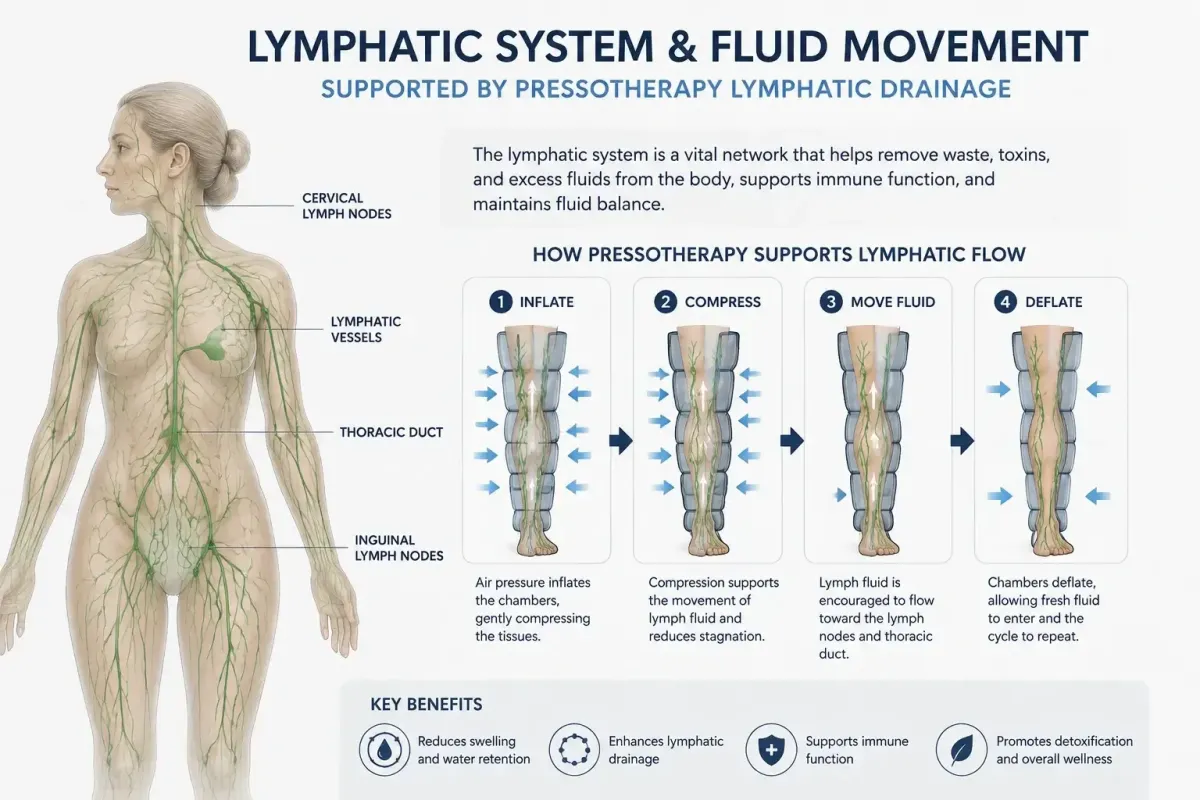
The lymphatic system is a network of vessels, nodes, and organs that runs throughout the body alongside the circulatory system. While the circulatory system delivers oxygen and nutrients to the tissues, the lymphatic system handles the return side of the equation. It collects excess fluid, cellular waste, proteins, and debris from the spaces between cells and returns them to the bloodstream for filtration and elimination.
Here is the crucial difference that explains why lymphatic support matters. The circulatory system has the heart as a powerful central pump that keeps blood moving continuously. The lymphatic system has no such pump. It depends entirely on external forces to move fluid through its vessels, primarily the contraction of surrounding muscles during movement, the pressure changes of breathing, and the natural massage that physical activity provides.
This design works well when the body is active and moving. But when movement decreases, when someone sits or stands for long periods, or when the natural efficiency of the system declines with age, lymphatic flow can slow. Fluid begins to accumulate in the tissues, particularly in the legs where gravity compounds the problem, producing the swelling, heaviness, and puffiness that signal sluggish lymphatic drainage.
How Pressotherapy Supports Lymphatic Drainage
Pressotherapy provides an external, mechanical assist to a system that relies on external forces to function. This is precisely why it maps so well to lymphatic support.
The multi-chamber garment applies sequential compression that begins at the extremities, at the feet or hands, and moves inward toward the center of the body. This directional, wave-like pressure mimics the natural pumping action that muscle contraction and movement normally provide, encouraging accumulated lymphatic fluid to move out of the tissues and toward the central lymphatic vessels where it can be processed.
The effect is comparable to manual lymphatic drainage massage, a technique performed by specialized therapists to encourage lymphatic flow. Pressotherapy delivers a similar directional, rhythmic pressure through a machine that applies consistent, measured force each cycle, making it a reliable and repeatable way to support lymphatic movement.
The evidence for compression-based lymphatic support is substantial. A systematic review and meta-analysis of intermittent pneumatic compression, the clinical technology behind pressotherapy, found that this sequential compression can meaningfully support lymphatic drainage and fluid movement. See: Efficacy of Intermittent Pneumatic Compression on Lymphedema. A separate pilot trial specifically examined compression sequencing designed to mimic manual lymphatic drainage, finding meaningful reductions in limb fluid volume. See:
Circulation Support
Beyond the lymphatic system, pressotherapy also supports blood circulation in the lower limbs, which is a related but distinct benefit.
Blood circulation in the legs faces the same fundamental challenge as lymphatic flow. Blood must return from the legs back up to the heart against gravity, and this venous return depends significantly on the muscle contractions of movement to assist it. When people sit or stand for extended periods, venous return can become sluggish, contributing to the pooling of blood and fluid in the lower legs.
The sequential compression of pressotherapy, moving from the feet upward toward the heart, supports venous return by mechanically assisting the movement of blood in the direction it needs to travel. For people who sit or stand for long periods, who travel frequently, or whose circulation feels sluggish, this circulation support is one of the primary reasons they explore pressotherapy.

Who Explores Pressotherapy for Lymphatic and Circulation Support
•Active adults who sit or stand for long periods and experience fluid accumulation, heaviness, or puffiness in the legs
•People who want to support their lymphatic system as part of a general wellness and circulation routine
•Frequent travelers who experience leg swelling and fluid retention after long flights
•Active adults over 45 whose natural circulatory and lymphatic efficiency has declined with age
•Anyone who experiences the sensation of sluggishness, heaviness, or fluid retention in the limbs and wants a comfortable, non-invasive option
As with all pressotherapy, screening comes first. Compression is not appropriate for people with a history of blood clots, deep vein thrombosis, severe cardiovascular disease, active infection, or during pregnancy without medical clearance. Harper MD confirms suitability before any session.
An Honest Note on What This Is and Isn't
Pressotherapy supports lymphatic drainage and circulation. It is a comfort and wellness therapy, not a treatment for any specific disease. If you have a diagnosed medical condition affecting your lymphatic system or circulation, that requires medical evaluation and care beyond what a wellness therapy provides, and Harper MD will tell you so plainly.
For the active adult whose goal is general support of fluid movement, circulation, and the comfortable, light feeling that comes with it, pressotherapy is a sensible and pleasant option. You can learn more on our pressotherapy service page, and everything begins with a free evaluation to confirm it fits your situation.
Book your evaluation at harpermd.mybodysite.com/harper-md-booking-page or contact us at harpermd.com/contact-us.
Frequently Asked Questions
Is pressotherapy the same as a lymphatic drainage massage? They work on the same principle and produce comparable effects. Manual lymphatic drainage is performed by hand by a specialized therapist, while pressotherapy delivers similar directional, rhythmic compression through a machine that applies consistent pressure each cycle. Many people find pressotherapy a convenient and repeatable way to support lymphatic movement.
How often should I do pressotherapy for lymphatic support? Because lymphatic and circulation support is ongoing rather than a one-time change, many people incorporate pressotherapy on a regular cadence. The right frequency depends on your goals and is set during your evaluation.
Will I notice anything after a session? Many people describe a feeling of lightness in the legs afterward. Some notice they need to use the restroom soon after a session, which is a normal result of fluid movement through the body. Individual responses vary.
Can pressotherapy help with circulation if I sit all day? Supporting circulation in the lower limbs is one of the most common reasons people who sit or stand for long periods explore pressotherapy. The sequential compression assists venous return, which can become sluggish with extended sitting. Harper MD will confirm it is appropriate for your situation during your evaluation.
