What Is Pressotherapy? A Complete Guide for Active Adults in Weston
There is a specific kind of tired that has nothing to do with sleep. It sits in the legs. It shows up after a long day on your feet, after a flight, after a hard training block, or simply after years of a body that doesn't move fluid quite as efficiently as it used to. The legs feel heavy. Sometimes they feel swollen. And the usual advice, which is to put your feet up and wait, only goes so far.
Pressotherapy is a non-invasive treatment designed to address exactly that sensation. It uses rhythmic, sequential compression to support the body's natural movement of fluid, and for active adults in Weston dealing with heavy legs, slow recovery, or circulation concerns, it offers a comfortable and low-friction option worth understanding.
This guide explains what pressotherapy is, how it works, what the evidence supports, and who it is genuinely appropriate for. It is written the way Harper MD approaches the treatment itself, which is honestly. Pressotherapy is not a weight loss treatment and it is not a cure for any disease. It is a supportive comfort, recovery, and circulation therapy, and understanding what it actually does is the first step in deciding whether it fits your goals.
What Pressotherapy Actually Is
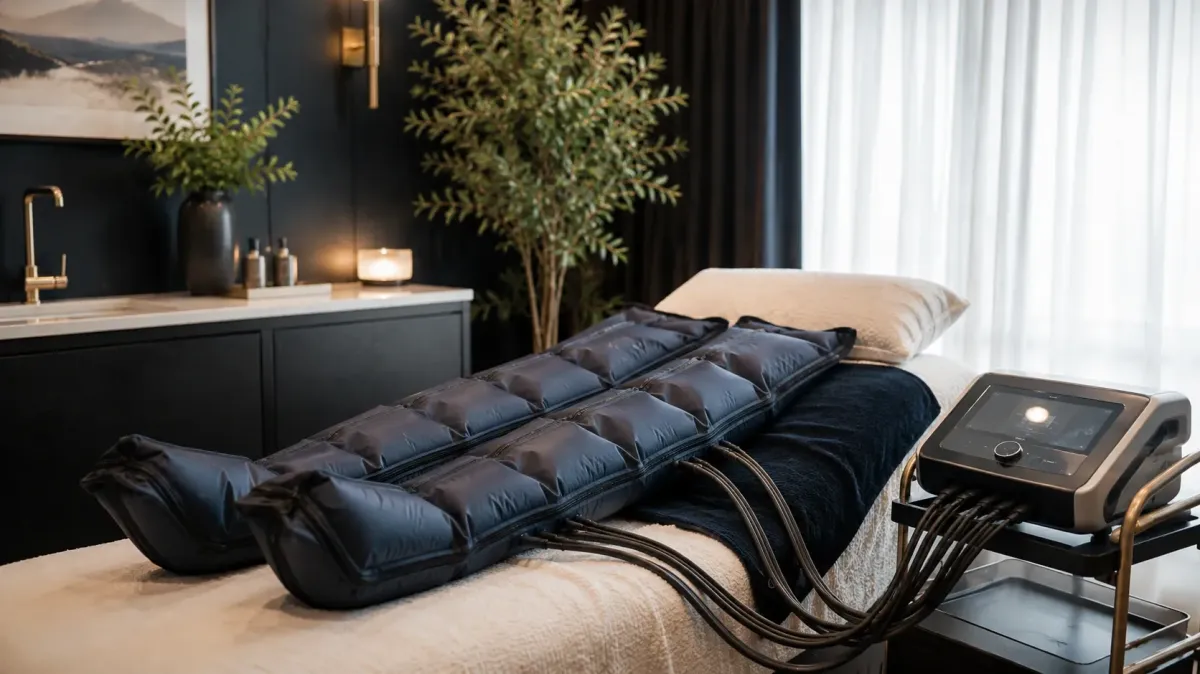
Pressotherapy is a non-invasive treatment that uses a multi-chamber garment, which can take the form of boots, sleeves, or a girdle, to apply gentle, sequential air pressure to the legs, arms, or abdomen. The pressure moves in waves from the extremities inward, mimicking the rhythm of a manual lymphatic drainage massage and encouraging the natural flow of fluid through the body.
The garment is made up of multiple air chambers connected to a computer-controlled compression device. That device inflates and deflates the chambers in a specific sequence, starting at the hands or feet and moving inward toward the center of the body. This wave-like pressure is designed to encourage the movement of fluid through the limbs toward the body's central circulatory and lymphatic systems.
The effect is similar to a manual lymphatic drainage massage, but delivered by a machine that applies consistent, measured pressure each cycle. The treatment is non-invasive and generally painless. Most people describe it as a firm, rhythmic squeezing, and you remain fully clothed throughout. A typical session runs about 30 to 45 minutes.
[IMAGE: pressotherapy-weston-fl-compression-treatment.webp]

Understanding the Lymphatic System and Why It Matters
To understand what pressotherapy supports, it helps to understand the lymphatic system, which is one of the most overlooked systems in the body.
The lymphatic system is a network of vessels and nodes that runs throughout the body, parallel to the circulatory system. Its job is to collect excess fluid, waste products, and cellular debris from the tissues and return them to the bloodstream for filtration and removal. Unlike the circulatory system, which has the heart as a central pump, the lymphatic system has no pump of its own. It relies on movement, muscle contraction, and breathing to move fluid through its vessels.
This is why the lymphatic system can become sluggish, particularly in people who sit or stand for long periods, who travel frequently, or whose activity has decreased. When lymphatic flow slows, fluid can accumulate in the tissues, producing the sensation of heaviness, swelling, and fatigue in the limbs that so many active adults recognize.
Pressotherapy provides an external, mechanical assist to this system. By applying sequential compression that moves from the extremities inward, it encourages the movement of accumulated fluid toward the central lymphatic and circulatory systems, supporting the natural drainage process that the body performs on its own but that can benefit from support.
What the Evidence Supports
The compression technology behind pressotherapy, known clinically as intermittent pneumatic compression, has a substantial research base, particularly in the areas of lymphatic drainage and recovery.
For active adults, one of the most relevant bodies of evidence concerns recovery. A systematic review and meta-analysis examining the effect of pressotherapy on performance and recovery in the management of delayed onset muscle soreness found that pressotherapy and intermittent pneumatic compression were used across studies to support recovery and reduce muscle soreness following exercise. See: The Effect of Pressotherapy on Performance and Recovery in the Management of Delayed Onset Muscle Soreness, systematic review and meta-analysis. The research reflects a developing but promising evidence base for pressotherapy as a recovery support tool.
In the area of lymphatic drainage, intermittent pneumatic compression has been studied extensively. A systematic review and meta-analysis of intermittent pneumatic compression for lymphedema found that this compression technology can meaningfully support lymphatic drainage and fluid movement, particularly as part of a broader decongestive approach. See: Efficacy of intermittent pneumatic compression on lymphedema, systematic review and meta-analysis.
The honest characterization of the evidence is this. Sequential compression has strong support for supporting lymphatic drainage and fluid movement, and a developing evidence base for recovery support in active populations. Pressotherapy is a comfort, circulation, and recovery support therapy. It is not a treatment for any specific disease, and Harper MD does not present it as one.

What Pressotherapy May Support
Patients explore pressotherapy for a range of comfort, recovery, and wellness goals. The areas below describe what the treatment is commonly associated with, not guaranteed outcomes. Individual responses vary.
Lymphatic drainage and fluid movement. Pressotherapy is most commonly used to support lymphatic drainage and help move fluid that can build up in the legs, arms, or abdomen. This is the same principle used to help ease swelling and a sense of heaviness.
Circulation support. By applying rhythmic compression that moves toward the heart, pressotherapy is associated with supporting blood flow in the lower limbs. It is often explored by people who sit or stand for long periods.
Relief for heavy, tired legs. Many people turn to pressotherapy for the sensation of relief and lightness it can provide in heavy, tired, or restless legs, particularly after long days on their feet or extended travel.
Recovery support. Because increased circulation helps deliver oxygen and nutrients to muscles, pressotherapy is often explored as part of a recovery routine after intense exercise or athletic activity.
Post-procedure swelling. Sequential compression is commonly used to help reduce swelling and support comfort during recovery from certain procedures. Whether it is appropriate for you is determined at your evaluation.
Relaxation and comfort. The uniform, rhythmic compression is inherently soothing, similar to a deep, sequential massage. Many people find the experience relaxing and use it simply for comfort and a sense of calm.
What a Pressotherapy Session at Harper MD Looks Like
Pressotherapy at Harper MD is designed to be comfortable and low-friction from start to finish. Here is what to expect.
Getting settled. You stay fully clothed and settle comfortably onto a treatment chair or bed. A team member helps you into the garment, which is wrapped around your legs, midsection, arms, or a combination, and connects it to the compression device.
During the session. The chambers inflate and release in a steady, sequential rhythm. You will feel a firm squeezing sensation that should feel like pressure, never pain. Most people find it relaxing and simply rest, read, or close their eyes for the 30 to 45 minutes.
Afterward. There is no downtime, and you can return to your day immediately. Many people describe a feeling of lightness in the legs afterward. Some people notice they need to use the restroom soon after, which is a normal result of fluid movement.
Pressotherapy is often done as a short series of sessions rather than a single visit, and any plan is set with you based on your goals. You can learn more about the treatment on our pressotherapy service page, and the right cadence for you is determined during your evaluation.
Safety and Who Pressotherapy Is Not For
Pressotherapy is non-invasive and generally very well tolerated. Even so, compression is not appropriate for everyone, which is why Harper MD screens for suitability before you begin. Pressotherapy may not be appropriate if you have any of the following:
•Deep vein thrombosis, known as DVT, or a history of blood clots
•Severe cardiovascular disease, including uncontrolled hypertension or heart failure
•Active infection, fever, or pain in the area to be treated
•Pregnancy, unless cleared by your doctor
For appropriate candidates, pressotherapy is comfortable and non-invasive, with no downtime. The sensation should always feel like firm pressure, never pain. This screening is not a formality. Compression can be genuinely unsafe with certain conditions, particularly a history of blood clots, which is why the evaluation comes first and why checking with your provider matters.
Is Pressotherapy a Weight Loss Treatment?
No. This deserves a direct answer because it is one of the most common misconceptions about pressotherapy, and Harper MD will not present the treatment as something it is not.
Pressotherapy works on fluid movement and circulation. Any change in how the limbs look or feel is generally related to reduced fluid retention rather than fat loss. If you step off a session feeling that your legs look leaner, that is fluid movement, not a change in body composition. The effect is real, but it is temporary and it is not weight loss.
If your goals include weight or body composition, Harper MD offers approaches that are actually designed for that. Rather than stretching pressotherapy into a role it does not fill, the honest path is to explore the full range of services and therapies built for metabolic and body composition goals. Pressotherapy can be a comfortable complement to that work, but it is not a substitute for it.
How Pressotherapy Fits Into Harper MD's Regenerative Health Approach
Pressotherapy is one comfortable, non-invasive option within a broader, individualized plan. It is not a standalone solution, and Harper MD views it as one piece of a larger recovery and wellness picture.
For active adults, pressotherapy complements the other recovery-focused approaches Harper MD offers. Depending on your goals, it may work alongside the following:
Alongside hyperbaric oxygen therapy, which supports tissue oxygenation and recovery, pressotherapy supports the fluid movement and circulation side of the recovery equation.
Alongside shockwave therapy and joint restoration, pressotherapy can support circulation and comfort as part of a broader recovery routine for active adults managing the physical demands of sport and training.
Everything begins with a free evaluation. Harper MD looks at your whole picture and recommends pressotherapy only when it is a sensible fit for your goals, alongside whatever other approaches best serve what you are trying to accomplish.
If you are considering pressotherapy in Weston, the starting point is a free evaluation. Book at harpermd.mybodysite.com/harper-md-booking-page or contact us at harpermd.com/contact-us.
Frequently Asked Questions
Does pressotherapy hurt? No. Pressotherapy is non-invasive and should feel like a firm, rhythmic squeezing, similar to a deep massage, never pain. Most people find it relaxing. You stay fully clothed throughout, and there is no downtime afterward.
How long is a session, and how often should I come? A typical session runs about 30 to 45 minutes. Pressotherapy is often done as a short series rather than a single visit, and many people return on a regular cadence depending on their goals. The right frequency for you is set during your evaluation.
Who should not have pressotherapy? Compression is not appropriate for everyone. Pressotherapy is generally not recommended for people with deep vein thrombosis or a history of blood clots, severe cardiovascular disease, an active infection or fever, or during pregnancy unless cleared by your doctor. This is why Harper MD screens for suitability before you begin and always recommends checking with your provider first.
Is pressotherapy a weight loss treatment? No. Pressotherapy is not a weight loss treatment. It works on fluid movement and circulation, and any change in how the limbs look or feel is generally related to reduced fluid retention rather than fat loss. If your goals include weight or body composition, Harper MD offers approaches that are actually designed for that.
How does pressotherapy fit with my other care at Harper MD? Harper MD views pressotherapy as one comfortable, non-invasive option within a broader, individualized plan. Depending on your goals, it may complement other approaches offered for recovery and circulation. Everything begins with a free evaluation.
