EBOO and the Body's Filtration, Circulation, and Oxygen Delivery
The idea of filtering and oxygenating the blood has an obvious intuitive appeal. Blood carries oxygen to every tissue, removes waste, and touches every system in the body, so the notion of supporting its quality and oxygenation resonates with anyone thinking proactively about their health. EBOO ozone therapy is built around that idea, and this article explains what the process actually does in terms of filtration, circulation, and oxygen delivery.
It is written for the person who wants to understand the real mechanism rather than the marketing version, and it is honest about both what EBOO involves and the important limits of what can be claimed about it.
Before going further, the essential context: the U.S. Food and Drug Administration has not approved ozone therapy, including EBOO, for the diagnosis, treatment, cure, or prevention of any disease. Harper MD states this plainly. EBOO is offered as an elective, medically supervised, adjunctive wellness procedure, never as a replacement for proven medical care, and only when an evaluation confirms it is appropriate for you.
This article is part of Harper MD's EBOO ozone therapy series. For a complete overview of what EBOO is, how the procedure is performed, and the important regulatory context around ozone therapy, read our full guide: What Is EBOO Ozone Therapy? An Honest Guide for Active Adults in Weston at harpermd.com/post/what-is-eboo-ozone-therapy.
What Happens to the Blood During EBOO
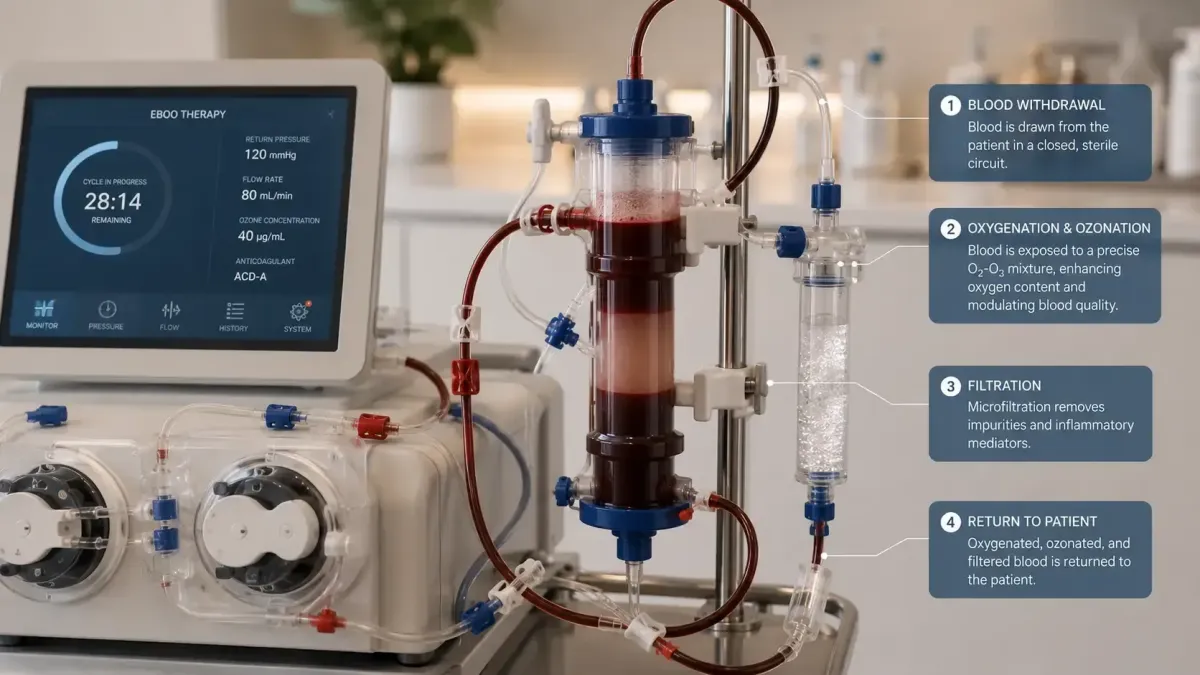
EBOO, which stands for Extracorporeal Blood Oxygenation and Ozonation, processes your blood outside the body through a closed, sterile circuit. Understanding the sequence helps clarify what the procedure actually does.
The process uses two intravenous lines. One draws blood out of the body into a closed, single-use circuit, and the other returns it. As the blood travels through the system, two things happen to it. First, it passes through a medical-grade filter. Second, it is exposed to a controlled mixture of oxygen and medical ozone under sterile conditions. The treated blood then flows back into the body, and the circuit runs continuously so that a single session processes several liters of blood over roughly 45 to 60 minutes.
This continuous, higher-volume processing is the defining feature that distinguishes EBOO from older ozone methods that treated only a small drawn sample. The larger volume is why EBOO is often described as a more comprehensive approach within the broader category of ozone therapy.
The Filtration Component
One of the two core elements of EBOO is filtration. As the blood circulates through the closed circuit, it passes through a medical-grade filter designed to work in concert with the oxygenation and ozonation process.
The concept of supporting the body's natural filtration is one of the primary reasons patients explore EBOO. The body already has sophisticated filtration systems, primarily the liver and kidneys, which continuously process and remove waste from the blood. EBOO is explored by people interested in supporting the body's natural filtration and circulation as part of a proactive wellness approach. It is important to frame this accurately. EBOO is associated with supporting these natural processes, not replacing the essential work that the liver and kidneys perform, and it is not a treatment for any condition affecting those organs.
The Oxygenation Component
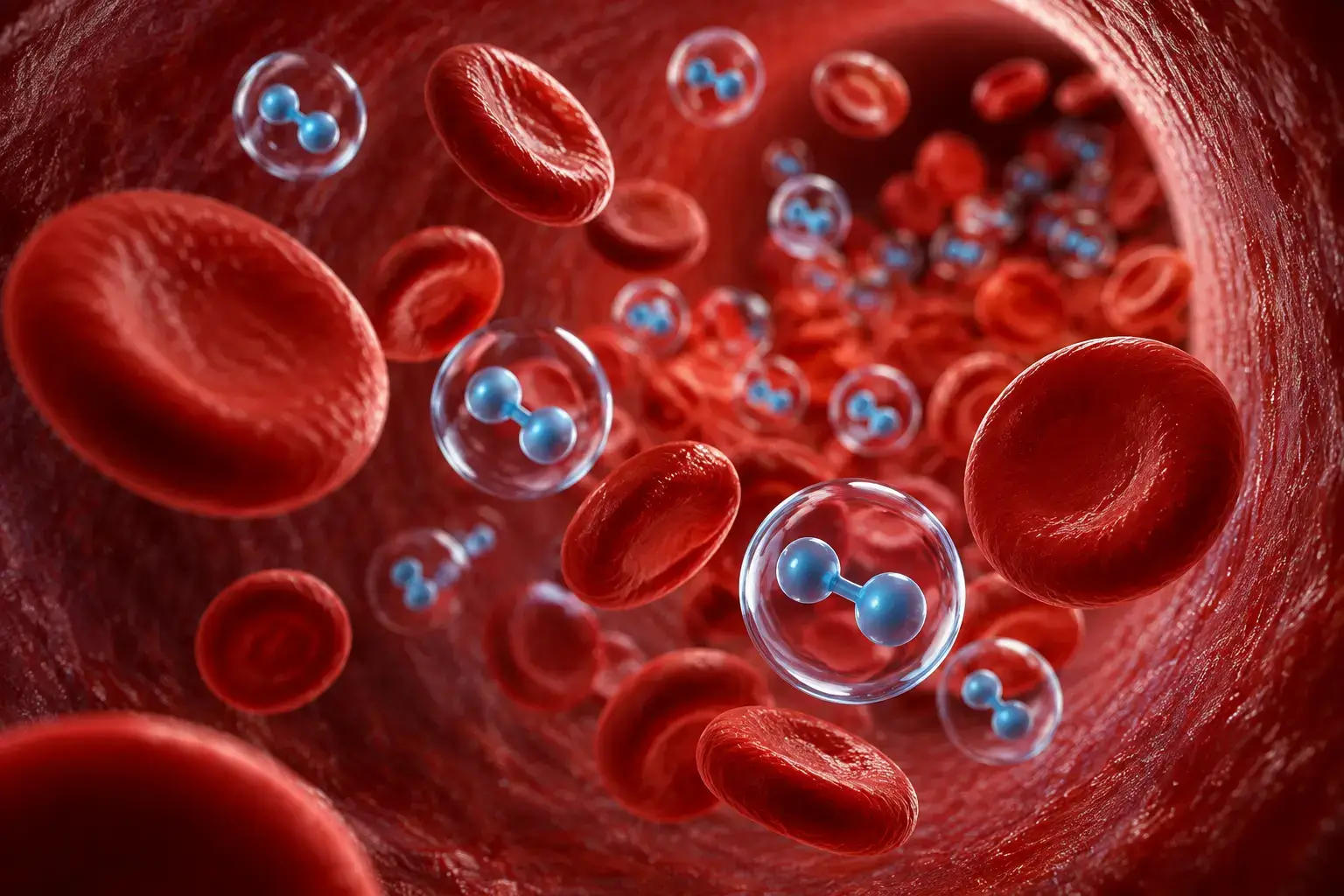
The second core element is oxygenation. During EBOO, the blood is exposed to a controlled mixture of oxygen and ozone, and oxygen delivery to tissues is one of the areas EBOO is commonly associated with.
Oxygen is fundamental to how the body produces energy. Every cell relies on oxygen for the mitochondrial process that generates cellular energy, and adequate oxygen delivery to tissues is essential for recovery, repair, and overall cellular performance. This is why supporting oxygen delivery is a theme that runs through several of the regenerative approaches Harper MD offers.
EBOO shares this thematic ground with hyperbaric oxygen therapy, which also focuses on supporting oxygen delivery, though through a completely different, non-invasive mechanism. Where hyperbaric therapy increases the oxygen dissolved into the blood through pressure, EBOO processes the blood directly through an external circuit. Depending on a person's goals and what their evaluation shows, one approach may fit better than the other, or they may serve complementary roles within a broader plan.
What This Can and Cannot Be Claimed to Do
This is where honesty matters most, and where Harper MD's approach differs from providers who overstate ozone therapy.
EBOO is associated with supporting the body's natural filtration and circulation and with supporting oxygen delivery to tissues. These are areas patients explore it for. They are not proven medical outcomes, and EBOO is not a treatment for any specific disease. The FDA has not approved ozone therapy for any medical condition, and any claim that EBOO treats, cures, or prevents a specific illness goes beyond both the evidence and the regulatory reality.
What Harper MD offers is an honest version of this procedure. Medically supervised, properly screened, delivered with sterile single-use equipment by trained staff, and framed accurately as an elective wellness procedure rather than a medical treatment. For the person interested in exploring blood oxygenation and filtration support as part of a proactive approach, that honest, supervised path is the responsible way to do it.
Who Explores EBOO for These Reasons
•Active adults interested in supporting their body's natural filtration and circulation as part of a proactive wellness approach
•People exploring oxygen delivery and cellular performance support as part of a broader regenerative health strategy
•Individuals already interested in oxygenation-focused approaches who want to understand how EBOO compares to and complements other options
•Patients who want a medically supervised, honestly framed version of ozone therapy rather than an unregulated alternative
As with all EBOO, candidate screening is mandatory and comes first. EBOO is not appropriate for people with G6PD deficiency, during pregnancy or breastfeeding, for those with active bleeding disorders or severe cardiovascular instability, and certain other conditions require special evaluation. Harper MD screens every candidate before beginning, because with EBOO this screening is the most important part of the process.
You can learn more about the procedure on our EBOO ozone therapy service page, and everything begins with a free, honest evaluation. Book at
Frequently Asked Questions
Does EBOO clean my blood? EBOO circulates blood through a filter and exposes it to oxygen and ozone, and it is explored by people interested in supporting the body's natural filtration and circulation. It is important to be accurate here. EBOO is associated with supporting the body's own filtration processes, not replacing the essential work of the liver and kidneys, and it is not a treatment for any condition.
How is EBOO different from a regular ozone therapy or IV? EBOO processes a much larger volume of blood than older small-sample ozone methods, working through several liters over a session by circulating the blood continuously through a closed circuit. This higher-volume processing is its defining feature within the broader category of ozone therapy.
Is EBOO FDA-approved for improving circulation? No. The FDA has not approved ozone therapy, including EBOO, for any medical condition. EBOO is offered at Harper MD as an elective, adjunctive wellness procedure and is associated with supporting circulation and oxygen delivery as areas patients explore, not as proven or approved medical outcomes.
How does EBOO compare to hyperbaric oxygen therapy? Both are associated with supporting oxygen delivery, but through very different mechanisms. Hyperbaric oxygen therapy is non-invasive and increases oxygen dissolved into the blood through pressure, while EBOO processes the blood directly through an external circuit. Which fits your goals is something Harper MD can help you understand during your evaluation.
