What Is Hyperbaric Oxygen Therapy? A Complete Guide for Active Adults in Weston
Oxygen is the one input the body cannot go without for more than a few minutes. Every cell depends on it for energy production, for tissue repair, and for the immune activity that keeps the body functioning. So the premise behind hyperbaric oxygen therapy is intuitive. If you increase the amount of oxygen available to the body's tissues, you support the biological processes that depend on it.
That premise is sound. But hyperbaric oxygen therapy, or HBOT, is also one of the most oversold treatments in the wellness industry, with claims that range from well-supported to wildly exaggerated. For an active adult in Weston considering hyperbaric oxygen therapy, the challenge is separating what the evidence actually supports from what marketing has attached to it.
This guide is written to do exactly that. It explains what HBOT is, how the specific chamber used at Harper MD works, what the research supports and what it doesn't, and who is a genuine candidate. It is deliberately honest about the difference between mild hyperbaric therapy and the hospital-grade treatment used for FDA-approved medical conditions, because that distinction matters, and most clinics gloss over it.
What Hyperbaric Oxygen Therapy Actually Is
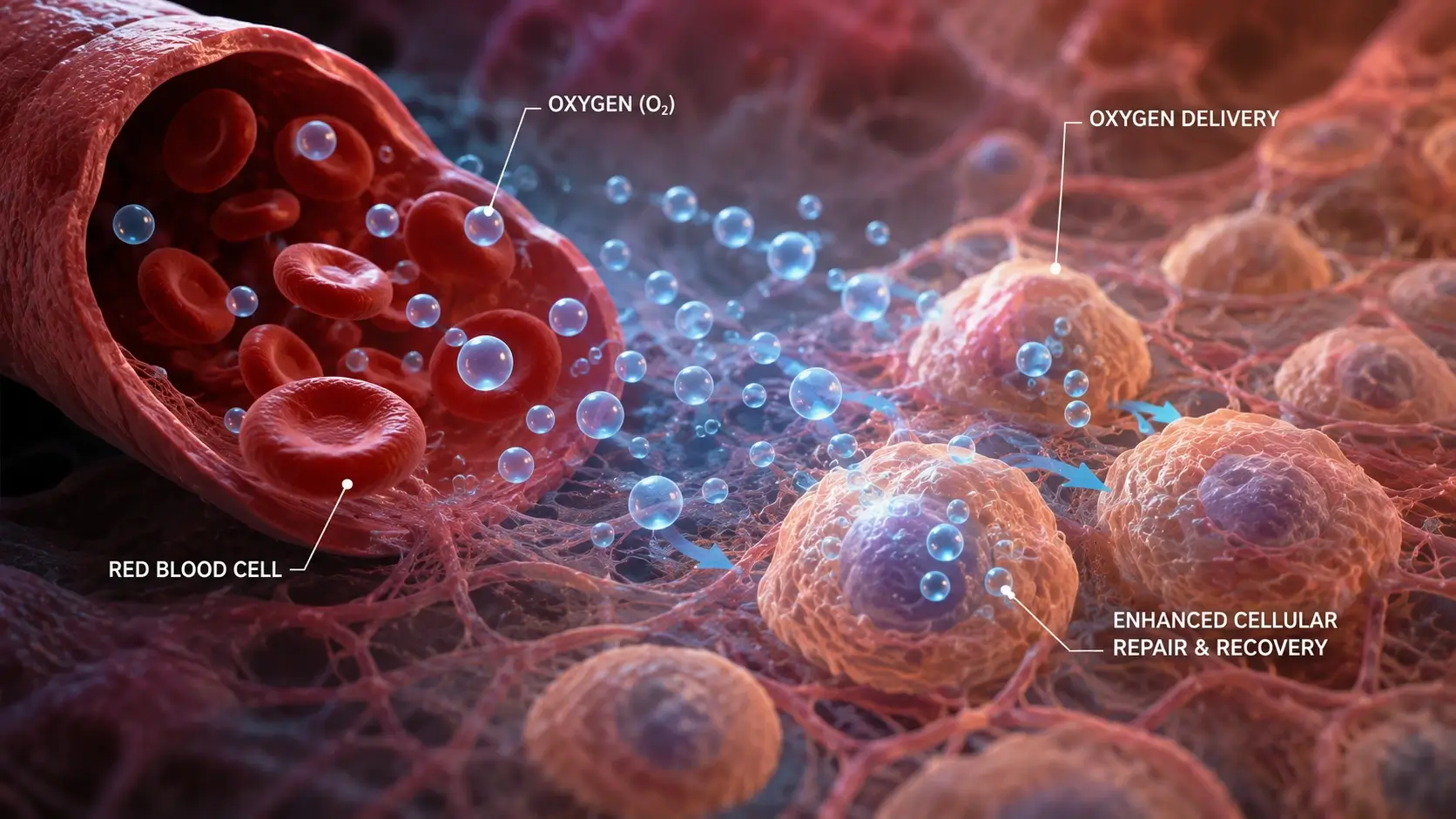
Hyperbaric oxygen therapy involves breathing oxygen-enriched air inside a pressurized chamber. The increased atmospheric pressure allows the body to take in more oxygen than it could at normal pressure, dissolving additional oxygen directly into the blood plasma, not just the red blood cells that normally carry it.
Under normal conditions, oxygen is transported almost entirely by hemoglobin in red blood cells, which are close to fully saturated during ordinary breathing. Increasing pressure changes this. According to the physical principle known as Henry's Law, the amount of a gas that dissolves into a liquid increases with pressure. Inside a hyperbaric chamber, the elevated pressure drives additional oxygen directly into the blood plasma, the cerebrospinal fluid, and other body fluids, allowing oxygen to reach tissues more readily, including areas where circulation is compromised.
This additional dissolved oxygen is the mechanism behind HBOT's effects. More available oxygen supports cellular energy production, stimulates the formation of new blood vessels over time, modulates inflammation, and supports the body's tissue repair processes.
Mild HBOT vs. Hospital-Grade HBOT: An Important Distinction
This is the distinction that most clinics offering hyperbaric oxygen therapy do not explain clearly, and it is essential to understanding what HBOT can realistically do for you.
Hyperbaric therapy is measured in ATA, or atmospheres absolute, a unit of pressure. Normal atmospheric pressure at sea level is 1.0 ATA. Hyperbaric chambers operate above that.
Hospital-grade HBOT operates at higher pressures, typically 2.0 to 3.0 ATA, in rigid, hard-shell chambers. This is the pressure range used for the specific medical conditions the FDA has approved HBOT to treat: decompression sickness, carbon monoxide poisoning, certain non-healing diabetic wounds, radiation tissue injury, gas gangrene, and a defined list of other serious medical indications. These treatments are delivered in hospital and specialized wound-care settings under direct medical supervision.
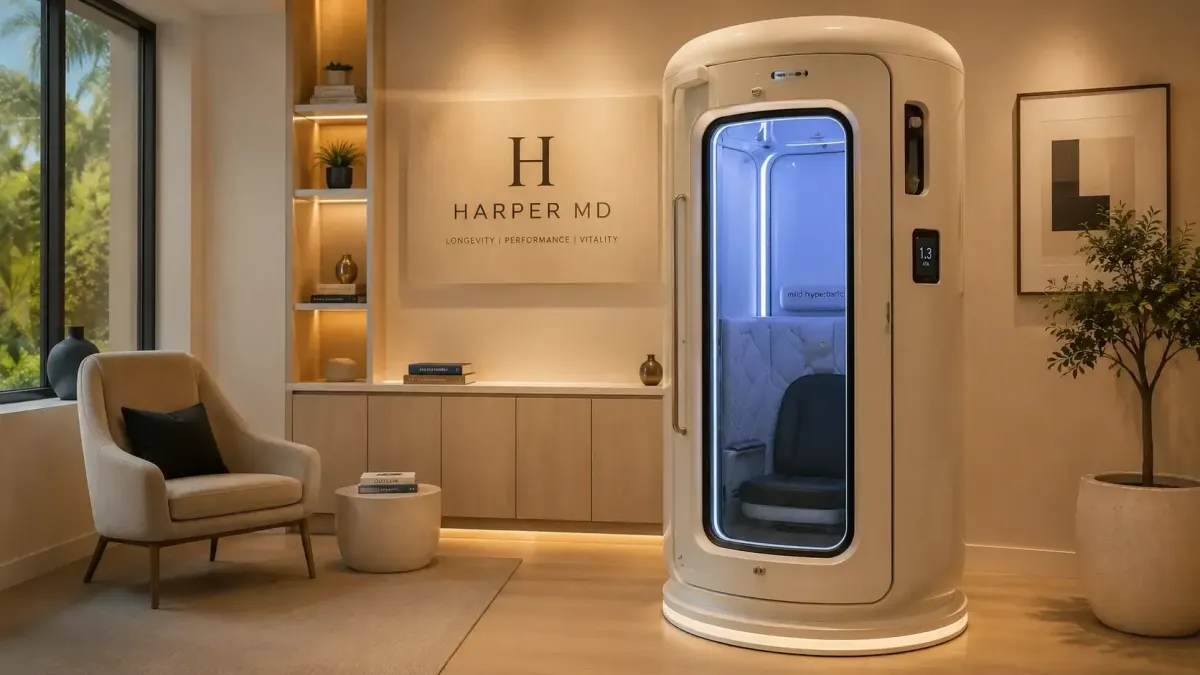
Mild HBOT operates at lower pressures, typically 1.3 to 1.5 ATA, in soft-shell chambers. This is the range used in wellness and regenerative health settings to support recovery, energy, inflammation management, and general cellular health. Harper MD's chamber, the Summit to Sea Vertical 4400, is a mild hyperbaric chamber operating at 1.3 ATA, FDA-cleared as a Class II medical device.
Why does this matter? Because the two are not interchangeable, and honest framing requires acknowledging it. Mild HBOT at 1.3 ATA is not a treatment for the FDA-approved medical conditions that require hospital-grade pressures. It is a supportive therapy for recovery, wellness, and regenerative health, and that is precisely how Harper MD positions it. Any clinic claiming a mild soft-shell chamber treats serious medical conditions is misrepresenting what the equipment does.
For a clear, non-commercial overview of the medical conditions the FDA has actually approved HBOT to treat, all of which require hospital-grade pressures, the Cleveland Clinic's patient education on hyperbaric oxygen therapy is a reliable reference.
How Mild HBOT Works in the Body
At 1.3 ATA, the mild pressure increase still meaningfully raises the amount of oxygen dissolved into the blood plasma and delivered to tissues. The biological effects that follow are the basis for HBOT's use in recovery and regenerative health contexts.
Increased tissue oxygenation. The additional dissolved oxygen reaches tissues throughout the body, including areas where circulation may be reduced. For active adults, this supports the oxygen-dependent processes of muscle recovery and tissue repair.
Reduced inflammation. Research indicates that hyperbaric oxygen exposure modulates the inflammatory response, influencing the signaling molecules that govern inflammation. For active adults managing the cumulative inflammatory load of training, sport, and daily physical demand, this is one of the most relevant mechanisms.
Support for new blood vessel formation. Over repeated sessions, increased oxygen availability stimulates angiogenesis, the formation of new blood vessels. This improves the long-term delivery of oxygen and nutrients to tissue, supporting recovery capacity over time.
Enhanced cellular energy production. Oxygen is essential to the mitochondrial process that produces cellular energy. Increased oxygen availability supports the energy production that every tissue, including the brain, depends on.
Mobilization of stem cells. Research has demonstrated that hyperbaric oxygen exposure can stimulate the mobilization of the body's own stem and progenitor cells, which participate in tissue repair and regeneration.
What the Evidence Supports, Honestly
The evidence base for mild HBOT in wellness and recovery contexts is developing, and it varies in strength across applications. Harper MD's position is to represent it accurately, neither overstating nor dismissing it.
Recovery from Physical Exertion
This is one of the better-supported applications for the active adult. A 2025 systematic review and meta-analysis examining hyperbaric oxygen therapy for exercise-induced muscle injury found that HBOT significantly accelerated recovery from exercise-induced muscle injury across ten studies. See: Effects of Hyperbaric Oxygen Therapy on Exercise-Induced Muscle Injury and Soreness, 2025. The same review noted that effects on muscle soreness specifically were more variable and pressure-dependent, an honest reflection of a developing evidence base.
Metabolic and Inflammatory Support
A 2025 review of hyperbaric oxygen therapy as an adjunctive intervention for metabolic disorders found that HBOT enhanced insulin sensitivity, reduced adipose tissue inflammation, and modulated lipid metabolism in preclinical and preliminary clinical research. See: Review of HBOT as an Adjunctive Intervention for Metabolic Disorders, 2025. The authors are appropriately measured, describing the evidence as promising and warranting further clinical study, which is the honest characterization.
Cognitive and Neurological Support
Research into HBOT's effects on cognitive function and neurological health is active and growing, particularly around aging-related cognitive concerns. The evidence here is earlier-stage than the recovery research, and Harper MD frames it accordingly, as an area of legitimate scientific interest rather than established fact.
The honest summary: mild HBOT has the strongest support for recovery from physical exertion and inflammation management, with promising but earlier-stage evidence for metabolic and cognitive support. It is a supportive regenerative health tool, not a cure for anything, and not a substitute for the medical treatments that serious conditions require.
What a Session at Harper MD Looks Like
Harper MD's hyperbaric oxygen therapy is delivered in the Summit to Sea Vertical 4400, a vertical, seated chamber that allows you to sit comfortably during your session rather than lying in an enclosed horizontal tube. The vertical design and clear viewing panels make the experience open and comfortable, without the claustrophobia some people associate with traditional chambers.
Here is what to expect:
•Sessions typically last 60 to 90 minutes
•You sit comfortably inside the chamber, and you can read, listen to music, or simply relax
•As the chamber pressurizes to 1.3 ATA, you'll feel a sensation of fullness in your ears, similar to the feeling during an airplane descent. This is normal and equalizes easily through swallowing or yawning
•The session itself is calm and requires nothing of you, as the therapy happens passively as you breathe the oxygen-enriched air
•After the session, there is no recovery period. You return to your normal day immediately
Most regenerative health protocols involve a series of sessions rather than a single visit, as the cumulative effects, particularly angiogenesis and the recovery benefits, build over repeated exposures. You can learn more about the service on our hyperbaric oxygen therapy page, and the specific protocol is determined during your evaluation based on your goals.
Who Is a Good Candidate for Hyperbaric Oxygen Therapy in Weston
Mild HBOT is appropriate for a broad range of active adults pursuing recovery, wellness, and regenerative health goals. Strong candidates include:
•Active adults dealing with slower recovery from training, sport, or physical demand who want to support their body's repair processes
•Individuals managing chronic inflammation as part of an active lifestyle
•Adults experiencing low energy or mental fatigue who want to support cellular energy production and cognitive clarity
•Patients already engaged in Harper MD's regenerative health services, such as peptide therapy, shockwave therapy, or hormone optimization, who want to add oxygen therapy as a complementary support
•Active adults focused on longevity and cellular health who want to incorporate HBOT into a broader proactive health strategy
HBOT is not appropriate for everyone. Certain conditions, including some lung conditions, recent ear surgery, certain types of untreated pneumothorax, and specific medical situations, are contraindications for hyperbaric therapy. Some people with claustrophobia, ear or sinus conditions, or recent surgery should consult a physician before beginning. This is why HBOT at Harper MD begins with an evaluation, to confirm that it's appropriate and safe for your specific situation.
How HBOT Fits Into Harper MD's Regenerative Health Approach
Hyperbaric oxygen therapy is not a standalone solution at Harper MD, and it produces its most meaningful results as part of a broader regenerative health plan. The underlying philosophy is consistent across everything Harper MD offers: support the body's own repair and regulatory systems rather than suppressing symptoms or waiting for decline to compound.
HBOT integrates naturally with Harper MD's other services:
Alongside shockwave therapy and joint restoration, HBOT supports the tissue oxygenation and reduced inflammation that the repair process depends on, addressing the systemic recovery environment while shockwave addresses the targeted tissue.
Alongside peptide therapy, HBOT complements the cellular signaling and recovery support that peptides provide, creating a more comprehensive environment for tissue repair and regeneration.
Alongside hormone optimization and longevity services, HBOT supports the energy production, cognitive clarity, and cellular health that active adults pursuing longevity are working to maintain.
For active adults whose goals span recovery, energy, inflammation, and long-term cellular health, an integrated evaluation determines how HBOT fits alongside the other tools most relevant to their situation, rather than treating it as an isolated intervention.
If you're considering hyperbaric oxygen therapy in Weston and want to understand whether it's appropriate for your goals, the starting point is an evaluation at Harper MD. Book at harpermd.mybodysite.com/harper-md-booking-page or contact us at harpermd.com/contact-us.
Frequently Asked Questions
Is hyperbaric oxygen therapy at Harper MD the same as what hospitals use? Not exactly, and it's important to be clear about the difference. Harper MD uses a mild hyperbaric chamber at 1.3 ATA, which is appropriate for recovery, wellness, and regenerative health support. Hospitals use hospital-grade chambers at 2.0 to 3.0 ATA for FDA-approved medical conditions like decompression sickness and non-healing wounds. Mild HBOT is a supportive wellness therapy, not a replacement for hospital-grade medical treatment.
What does hyperbaric oxygen therapy feel like? Most people find it comfortable and relaxing. You sit in the chamber and breathe normally. As it pressurizes, you'll feel fullness in your ears similar to an airplane descent, which equalizes easily. During the session you can read, listen to music, or rest. There's no discomfort and no recovery period afterward.
How many sessions will I need? It depends on your goals. Because the benefits, particularly new blood vessel formation and recovery support, build cumulatively over repeated sessions, most regenerative health protocols involve a series rather than a single visit. Your specific protocol is determined during your evaluation.
Is HBOT safe? For appropriate candidates, mild HBOT has a strong safety profile. However, certain conditions, including some lung conditions, recent ear surgery, and specific medical situations, are contraindications. This is why Harper MD begins with an evaluation to confirm HBOT is appropriate and safe for your individual situation.
Does insurance cover hyperbaric oxygen therapy? Insurance typically covers HBOT only for FDA-approved medical indications delivered at hospital-grade pressures, not for the mild HBOT used in wellness and regenerative health settings. Harper MD's HBOT is a self-pay service. HSA and FSA payments are accepted, and payment plan options are available.
