
Peptides for Women: What's Different and What to Know
Most of the conversation around peptide therapy is implicitly aimed at men. The marketing, the forums, and much of the content focus on male goals and male physiology, which leaves active women with a real question. Do peptides apply to me, and is anything different? The answer is yes, peptides are genuinely relevant for women, and yes, there are some differences worth understanding.
This article is written specifically for the active woman considering peptide therapy. It covers what peptides can support for women, how the considerations differ from men, and how peptides fit alongside the hormonal changes that define midlife for women.
This article is part of Harper MD's peptide therapy series. To understand how peptides compare to TRT, HRT, HGH, and other regenerative approaches, and how to choose the right one for your goals, read our comparison guide: Peptide Therapy vs. the Alternatives at harpermd.com/post/peptide-therapy-vs-alternatives.
Why Peptides Are Relevant for Women
The biological processes that peptides support are not male-specific. Growth hormone decline, slower recovery, body composition changes, and shifts in cellular health affect women just as they affect men, and often become particularly noticeable during and after the menopausal transition.
Growth hormone, for instance, declines with age in women as it does in men, and the downstream effects on recovery, sleep quality, connective tissue, and body composition are directly relevant to active women. GH-releasing peptides that support the body's own growth hormone production address these changes regardless of sex. Similarly, tissue repair peptides support recovery from the physical demands of an active life in women the same way they do in men.
So the first thing to know is that the underlying rationale for peptide therapy applies fully to women. The processes peptides support are human, not male.
What Peptides Can Support for Women
Recovery and tissue repair. Active women dealing with slower recovery from training, sport, or the physical demands of a full life explore peptides for the same recovery support that men do. The GH-IGF-1 axis and tissue repair pathways are central to recovery in everyone.
Body composition. The body composition changes that accompany aging and the menopausal transition, particularly shifts toward increased abdominal fat and difficulty maintaining lean mass, are areas where peptides are explored. Growth hormone peptides support the body composition environment, and for women whose changes coincide with hormonal shifts, addressing both the peptide and hormonal pathways together is often the more complete approach.
Cellular health and energy. Peptides that support cellular signaling and the growth hormone axis are explored by women for energy, recovery capacity, and the general cellular health that underpins how the body functions and feels.
Sleep quality. Because GH-releasing peptides support the deep, slow-wave sleep phases, and because sleep quality frequently declines during the menopausal transition, this is an area of particular relevance for many women.
What's Different for Women
While the rationale applies fully to women, there are some considerations that differ and that a thoughtful provider accounts for.
Dosing. Peptide dosing is individualized in everyone, and for women the appropriate dosing is calibrated to female physiology rather than borrowed from male protocols. This is one of the reasons self-prescribing from generic online sources is particularly problematic for women, as the protocols circulating in those spaces are frequently male-oriented.
The hormonal context. For women, peptide therapy frequently intersects with the hormonal changes of perimenopause and menopause. The interplay between peptides and a woman's hormonal picture, including whether hormone optimization is also appropriate, is an important part of a complete evaluation. Peptides and hormone therapy address different pathways, and for many women the most effective approach considers both.
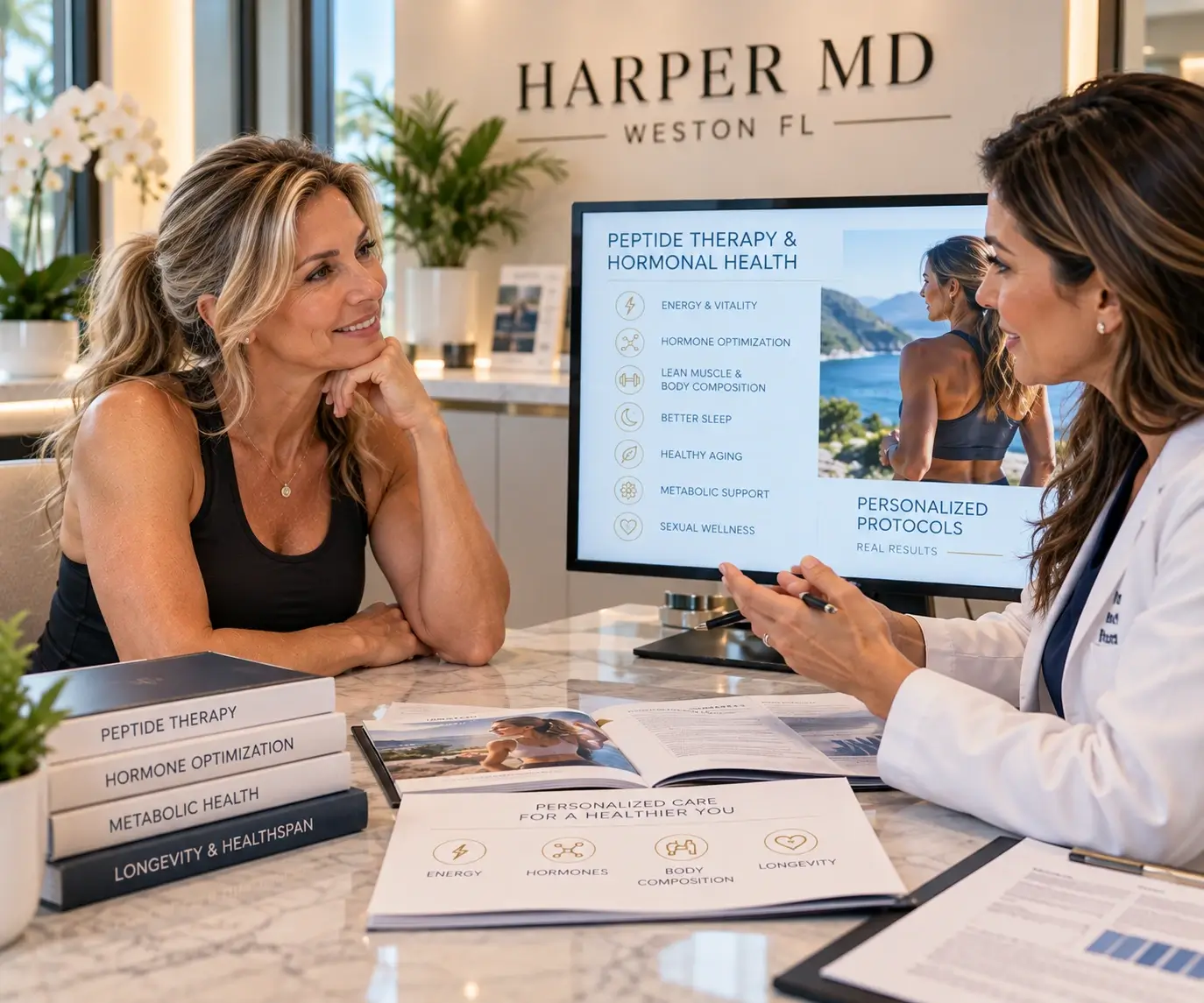
This is why Harper MD evaluates the full picture for women, including both the peptide and hormonal pathways. You can learn more about the clinic's approach to hormone optimization and longevity for women, which frequently works alongside peptide therapy as part of a complete plan.
How Peptides Fit With Hormone Therapy for Women
For many women in midlife, the most common and useful question is not peptides versus hormones, but how the two work together.
Hormone replacement therapy restores estrogen, progesterone, and sometimes testosterone, addressing the wide-ranging effects of the menopausal transition. Peptides support recovery, cellular health, and body composition through the growth hormone and tissue repair pathways. These are complementary, not competing. The hormonal foundation that HRT provides and the recovery and cellular support that peptides provide address different dimensions of how an active woman's body changes with age.
The right combination depends entirely on the individual, which is what an evaluation determines. Some women are best served by addressing the hormonal foundation first. Others benefit from both together. The point is that for women, peptide therapy is often most powerful as one part of an approach that also considers the hormonal picture, rather than in isolation.
If you are an active woman wondering whether peptides, hormone optimization, or a combination fits your goals, a free evaluation is where that gets answered. Book at harpermd.mybodysite.com/harper-md-booking-page.
Frequently Asked Questions
Are peptides safe for women? For appropriate candidates using well-studied peptides from legitimate sources under medical supervision, with dosing calibrated to female physiology, the safety considerations are similar to those for men. The key is individualized dosing and proper evaluation rather than borrowing male-oriented protocols from online sources.
Will peptides affect my hormones? GH-releasing peptides work on the growth hormone axis rather than directly on estrogen and progesterone, but because a woman's hormonal picture is interconnected, the full context matters. This is why a complete evaluation for women considers both the peptide and hormonal pathways.
Can I use peptides during menopause? Many women explore peptides during and after the menopausal transition, precisely because the changes in recovery, body composition, and sleep that accompany this period are areas peptides support. Whether and how they fit your situation, including alongside hormone therapy, is determined through evaluation.
Should I do peptides or hormone therapy? For many women the most effective approach considers both, because they address different pathways. Hormone therapy restores the hormonal foundation, while peptides support recovery and cellular health. The right combination for you depends on your individual picture, which an evaluation determines.
Harper MD Health & Wellness | 17150 Royal Palm Blvd #3, Weston, FL 33326 | (954) 338-1111 | harpermd.com
This content is for educational purposes only and does not constitute medical advice. Individual results vary. Peptide therapy involves individual candidacy considerations that must be evaluated by a qualified healthcare provider. Not all peptides discussed are FDA-approved for all uses described. If you are experiencing a medical emergency, call 911.
